Which coding tools do LLMs actually recommend? We tested 10 models to find out
4,209 brand mentions across 30 coding tools. The AI recommendation layer is running 18 months behind developer reality, and one company you've never heard of owns the citations.
TL;DR
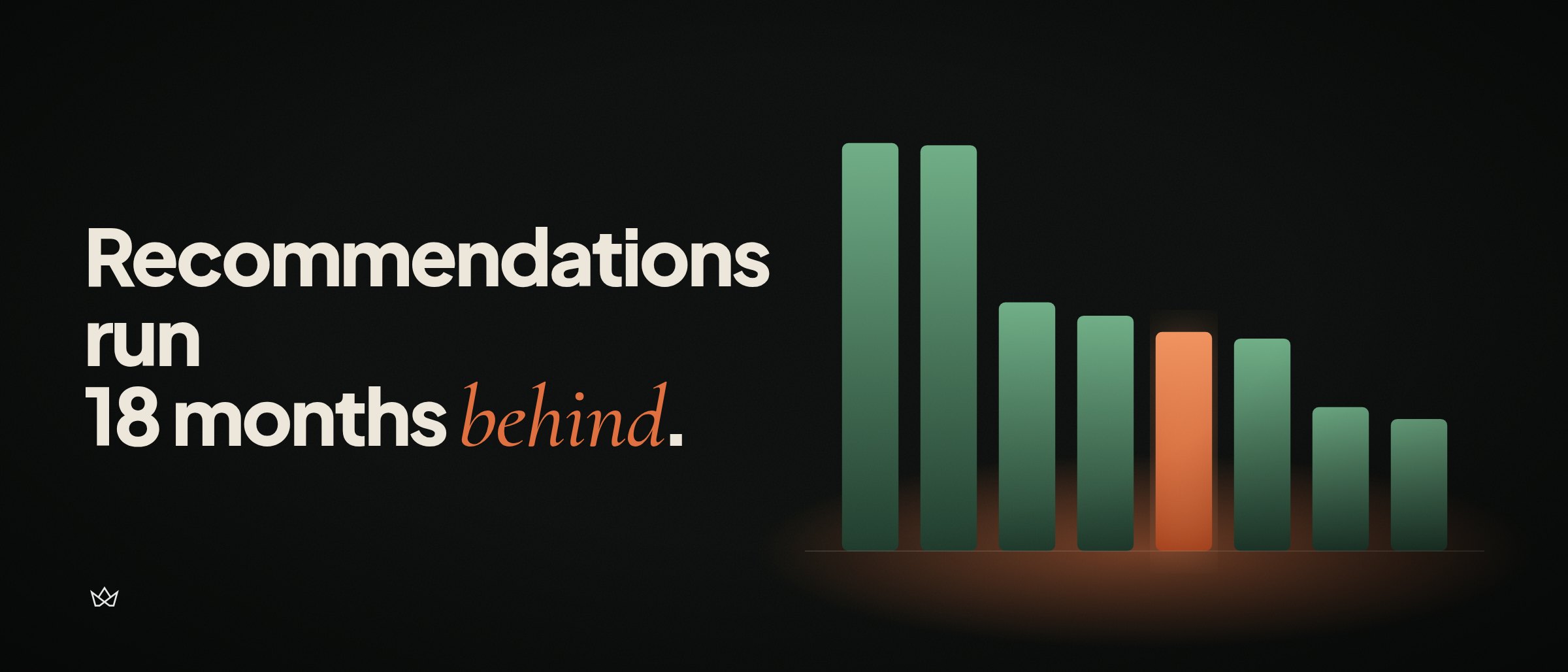
We asked 10 AI search engines 100 questions about coding tools. They returned 4,209 brand mentions across 30 products. GitHub Copilot leads with a 55.3 AI visibility score. Cursor is right behind at 55.0, effectively a coin flip. But the real story is at #5: AI still ranks Tabnine as a top-5 coding tool, a brand most engineers moved on from years ago. The recommendation layer is running roughly 18 months behind developer reality.
The full top 15
| Rank | Brand | AI Visibility | Models |
|---|---|---|---|
| 1 | GitHub Copilot | 55.3 | 10/10 |
| 2 | Cursor | 55.0 | 10/10 |
| 3 | Claude Code | 33.7 | 8/10 |
| 4 | Codex | 31.9 | 9/10 |
| 5 | Tabnine | 29.7 | 10/10 |
| 6 | Windsurf | 28.8 | 10/10 |
| 7 | Amazon Q Developer | 19.5 | 10/10 |
| 8 | Sourcegraph Cody | 17.9 | 10/10 |
| 9 | Replit | 16.3 | 10/10 |
| 10 | Augment Code | 14.4 | 10/10 |
| 11 | Aider | 13.5 | 9/10 |
| 12 | Continue | 13.0 | 10/10 |
| 13 | Qodo | 11.9 | 9/10 |
| 14 | JetBrains AI Assistant | 8.7 | 10/10 |
| 15 | Bolt.new | 7.9 | 8/10 |
The median brand sits at 8%. Most coding tools are functionally invisible to AI search.
Tabnine is still a top-5 coding tool according to AI
Tabnine scores 29.7 and appears on all 10 models. Ask most engineers shipping code in 2026 and they'll tell you Tabnine peaked years ago. The AI recommendation landscape hasn't caught up.
This is the training-data echo effect. Tabnine features prominently in comparison articles and Stack Overflow discussions from 2021 through 2023. Those articles are baked into the training data of models like Gemini, DeepSeek, Mistral, and Qwen. The models are recommending tools based on a version of the world that no longer exists. We unpack the Tabnine gap on its own.
A company you probably haven't heard of owns the citation game
Augment Code ranks #10 in overall visibility. Not remarkable on its own. But augmentcode.com is the #1 cited domain on four out of five AI search engines we tested. 328 citations. More than Wikipedia. More than Stack Overflow. More than any media outlet.
Augment Code has quietly built the content library that AI models treat as authoritative for this entire category. Visibility score and citation dominance are different metrics, and this brand proves they don't always move together. Here's how an unknown tool won the citation layer.
Models don't push their own products
One of the most interesting structural findings: AI models are not aggressively promoting tools built by their parent companies. ChatGPT mentions Claude Code more often than Claude itself does. Claude does not disproportionately recommend Claude Code. The corporate self-promotion angle people worry about simply doesn't show up in the data.
The exception is Grok. Grok mentions Cursor 81 times and Codex zero times. Given that xAI (Grok's parent) and OpenAI (Codex's parent) are direct competitors, this looks less like self-promotion and more like a corporate feud showing up in product recommendations.
Two different leaderboards
Models that search the web in real time (ChatGPT, Perplexity, Claude) produce different rankings than models running on training data alone (Gemini, DeepSeek, Mistral, Qwen). The web-search models see Claude Code and Codex. The training-only models barely know they exist.
If your tool launched after early 2024, your only path to AI visibility runs through the models that search the web. The rest of the AI landscape hasn't learned you exist yet.
What this means
The AI recommendation layer for coding tools is running 18 months behind developer reality. Buyers who ask ChatGPT, Perplexity, or any other AI search engine what coding tool to use are getting a picture shaped by training data from 2023, citation patterns dominated by one relatively unknown vendor, and model-level differences that have nothing to do with product quality.
Whether that matters depends on how many of your potential users start their research with AI. Given that ChatGPT alone has 900 million weekly users, the answer is probably more than you think. The first step for any tool in this market is measuring where you actually stand.
The full report covers all 30 brands with model-by-model breakdowns, head-to-head matchups, citation analysis, and a playbook for improving AI visibility in this category.
Read the full AI Coding Tools reportFrequently asked questions
Which AI coding tool is recommended most by AI?
GitHub Copilot, with a 55.3 AI visibility score across 10 models, narrowly ahead of Cursor at 55.0. The two are effectively tied, the closest race in any category we've studied. See the head-to-head breakdown.
Why does AI still recommend Tabnine?
The training-data echo effect. Tabnine dominated "best AI coding tools" content from 2021-2023, and that content is baked into the training data of models that don't search the web. Those models recommend a version of the market that no longer exists.
What does it mean that Augment Code owns the citations?
A brand can be mid-tier in visibility (Augment Code is #10) while being the #1 source AI models cite when answering questions about the whole category. Its content shapes what AI says about Copilot and Cursor. Citation dominance and mention volume are different metrics.
How were these scores measured?
100 buying-style prompts per category across 10 AI models, parsed for mentions, recommendations, citations, and sentiment, then combined into a weighted 0-100 score. Full details in our methodology post.
Renown is an AI visibility platform that tracks how AI models talk about your brand across ChatGPT, Claude, Gemini, Perplexity, and Google AI Overviews.
Related Articles
Six Questions to Ask Your AI Visibility Data
A score is a thermometer. It tells you there's a fever. Six questions that tell you why, and what to do about it.
Ask Renown From Claude and ChatGPT
Your AI visibility data, answered by the AI you already use. Connect once, then ask in plain language.
How AI Chooses Its Sources: 3,543 Citations, Analyzed
AI doesn't read your website. It reads Reddit, YouTube, Wikipedia, and a handful of independent blogs. We have the data: 3,543 citations across two engines and 60 questions.


