What AI trusts: a citation analysis across 3,000 AI responses
AI search engines cite sources. We tracked which ones across 3,000 responses. The hierarchy is clear, and most marketing content sits at the bottom of it.
TL;DR
AI search engines don't generate recommendations from nothing. They cite sources. We tracked those citations across 3,000 responses from 10 AI models covering three B2B categories. The patterns reveal what types of content AI models consider trustworthy enough to reference, and most marketing content sits at the bottom of the hierarchy.
The citation hierarchy
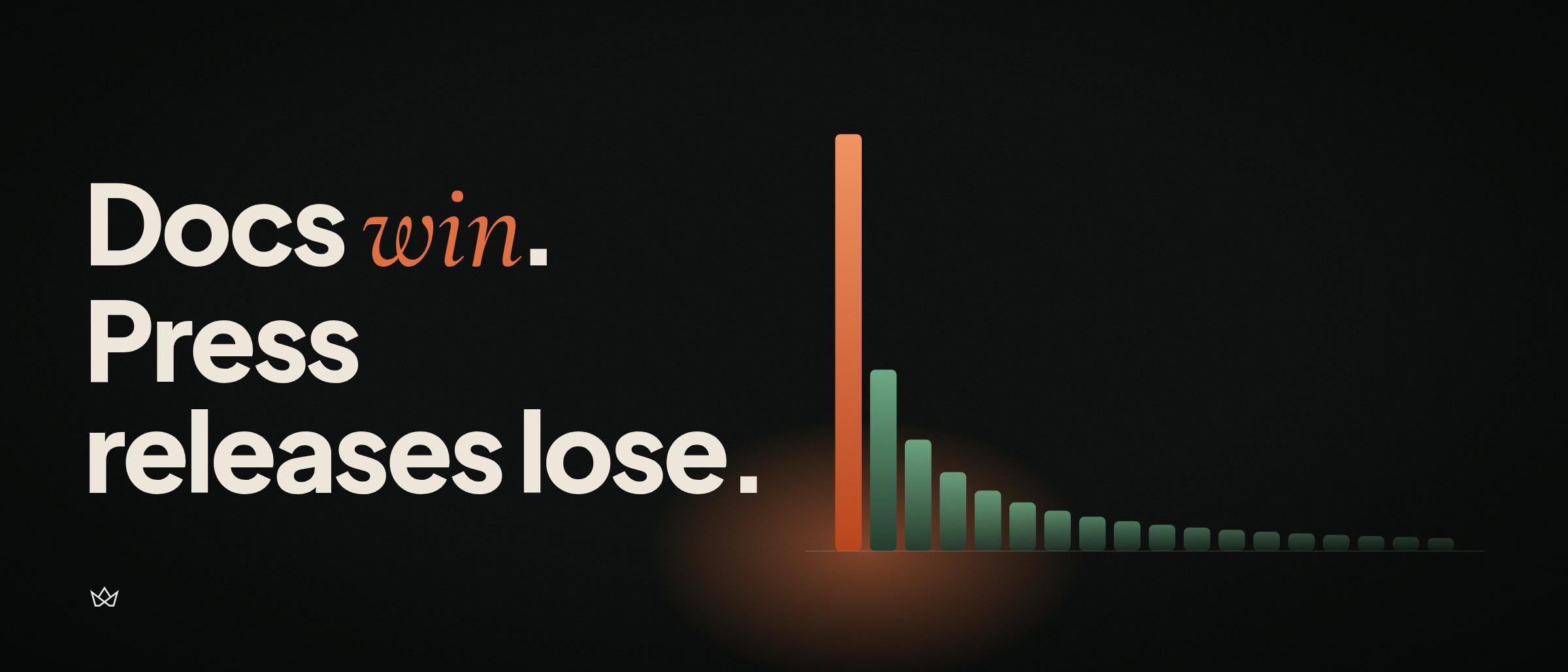
Across all three reports, vendor-owned technical content ranks highest. Documentation sites, technical blogs, and comparison pages published by vendors earn the most citations. This is true even when the vendor isn't the brand being recommended. ZoomInfo's blog gets cited when AI recommends Apollo. Augment Code's content gets cited when AI recommends Copilot.
Below vendor content, community discussion sites rank next. Reddit threads, Stack Overflow answers, and developer community posts appear frequently as citation sources. These carry weight because AI models associate them with practitioner-level credibility.
Vendor-neutral review sites (G2, Gartner, Forrester) appear but less prominently than you might expect. These sites are often gated, which limits AI models' ability to pull specific data from them.
General media outlets, press releases, and social media posts rank lowest. AI models rarely cite a TechCrunch article or a LinkedIn post when recommending a specific B2B tool.
The specific findings
In outbound sales, pipeline.zoominfo.com leads with 188 citations across four AI search engines. ZoomInfo's editorial content is the canonical reference for this category.
In AI coding tools, augmentcode.com leads with 328 citations across four search engines. A brand ranked #10 in overall visibility owns the citation layer for a category dominated by Copilot and Cursor.
In observability, the citation landscape is more distributed across vendor documentation sites, but the same pattern holds: comprehensive, technical, regularly updated content earns citations.
Content that doesn't get cited
Across all 3,000 responses, certain content types almost never appear as citation sources.
Press releases. Product launch announcements. Social media posts. Gated content that requires an email or login to access. Thin marketing pages with feature lists and screenshots but no substantive information. Podcast transcripts and video summaries.
AI models are looking for dense, textual, well-structured information they can parse and attribute. If your content is primarily visual, gated, or promotional, it's not entering the citation pool.
What to optimize for
The data suggests a specific content checklist for brands that want to earn AI citations.
Publish comprehensive technical content that covers your entire category, not just your own product. Update it regularly so web-search models find fresh versions. Structure it with clear headings, tables, and specific data points AI can extract. Keep it ungated. Cover competitor comparisons honestly rather than avoiding them. Our content strategy guide and schema markup guide cover the mechanics.
The brands winning the citation game aren't the brands with the biggest marketing budgets. They're the brands that built the most useful, comprehensive, machine-readable content libraries for their categories.
Observability report · Outbound Sales report · AI Coding Tools reportFrequently asked questions
What content does AI cite most?
Vendor-owned technical content: documentation, technical blogs, and multi-brand comparison pages. It ranks highest even when the citing answer recommends a different brand. Community discussion (Reddit, Stack Overflow) ranks next.
Why don't G2 and Gartner get cited more?
They're often gated, which limits AI models' ability to pull and attribute specific data. Ungated, parseable content gets cited more reliably than authoritative-but-locked sources.
What content never gets cited?
Press releases, product announcements, social posts, gated content, thin feature-list marketing pages, and podcast or video transcripts. AI wants dense, textual, well-structured information it can parse and attribute.
How do I earn more AI citations?
Publish comprehensive, category-spanning technical content, keep it ungated and current, structure it with clear headings, tables, and specific data, and cover competitors honestly. Budget isn't the differentiator; machine-readable usefulness is.
Renown is an AI visibility platform that tracks how AI models talk about your brand across ChatGPT, Claude, Gemini, Perplexity, and Google AI Overviews.
Related Articles
Six Questions to Ask Your AI Visibility Data
A score is a thermometer. It tells you there's a fever. Six questions that tell you why, and what to do about it.
Ask Renown From Claude and ChatGPT
Your AI visibility data, answered by the AI you already use. Connect once, then ask in plain language.
How AI Chooses Its Sources: 3,543 Citations, Analyzed
AI doesn't read your website. It reads Reddit, YouTube, Wikipedia, and a handful of independent blogs. We have the data: 3,543 citations across two engines and 60 questions.


