Apollo dominates every metric when AI recommends outbound sales tools
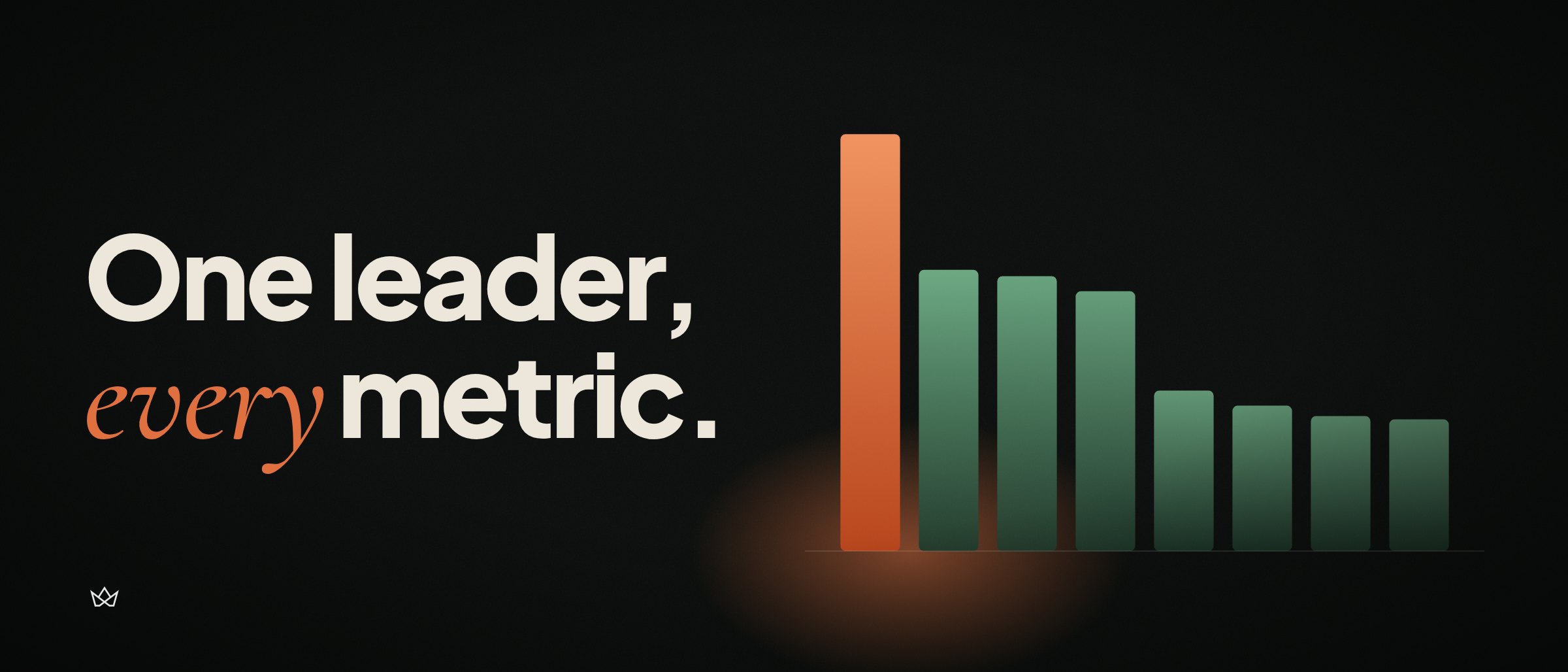
Apollo leads first-pick rate, total mentions, sentiment, and recommendation rate. The old Outreach-vs-Salesloft duopoly framing is gone. It's Apollo vs everyone else.
TL;DR
We asked 10 AI models 100 questions about outbound sales tools. Apollo leads on every dimension we measured: a 60.5 AI visibility score, 96 head-to-head first-pick wins, 645 total mentions across 1,000 responses, the highest sentiment in the niche (0.41), and a 21% recommendation rate. The old Outreach-vs-Salesloft framing no longer reflects how AI sees this market. It's Apollo versus everyone else.
The full top 15
| Rank | Brand | AI Visibility | Models |
|---|---|---|---|
| 1 | Apollo | 60.5 | 10/10 |
| 2 | Salesloft | 40.8 | 10/10 |
| 3 | ZoomInfo | 39.9 | 10/10 |
| 4 | Outreach | 37.7 | 10/10 |
| 5 | HubSpot Sales Hub | 23.3 | 10/10 |
| 6 | Clay | 21.1 | 9/10 |
| 7 | Lemlist | 19.6 | 10/10 |
| 8 | Gong | 19.1 | 10/10 |
| 9 | Instantly | 19.0 | 9/10 |
| 10 | LinkedIn Sales Nav | 17.4 | 10/10 |
| 11 | Cognism | 17.3 | 10/10 |
| 12 | Smartlead | 16.3 | 10/10 |
| 13 | 6sense | 14.6 | 10/10 |
| 14 | Reply.io | 14.1 | 10/10 |
| 15 | Lusha | 10.3 | 10/10 |
The median brand sits at 10%. Sixteen more brands are in the full report, most of them invisible.
Salesloft is #2. Outreach is #4. The duopoly framing is wrong.
For years the outbound sales conversation was Outreach versus Salesloft. Which sequencer, which analytics, which integrations. That framing shaped RFPs, G2 comparisons, and conference panels. It no longer reflects how AI search sees the market.
Salesloft holds #2 at 40.8. ZoomInfo sits at #3 with 39.9. Outreach comes in at #4 with 37.7. Apollo's lead over the field is nearly 20 points. The traditional debate is no longer the frame. The conversation has moved to Apollo-vs-everyone-else.
ZoomInfo's blog is cited more than Wikipedia
This is the finding that should get the attention of every B2B content team. ZoomInfo's pipeline.zoominfo.com is the #1 cited domain on Claude and Perplexity for outbound sales queries. 188 citations across four AI search engines. More than Wikipedia. More than Reddit. More than any third-party publication.
ZoomInfo's editorial team built a content library AI models treat as the canonical reference for this category. They didn't optimize for Google rankings alone. They built comprehensive, technical, comparison-heavy content that AI models find credible enough to cite. That strategy now pays compounding dividends in AI visibility. We dig into how a vendor blog out-cites Wikipedia separately.
Lavender gets recommended at 3x Apollo's rate (per mention)
Lavender appears in only 59 mentions across 1,000 responses. But when it does appear, it gets recommended 32% of the time. Apollo's recommendation rate is 21% on 645 mentions.
These are different metrics measuring different things. Apollo has massive reach. Lavender has concentrated intent. When AI mentions Lavender, it tends to be in the context of a specific recommendation rather than a general market overview. For a brand with a fraction of Apollo's presence, that's a remarkably strong positioning signal. Here's why fewer mentions can mean more influence.
If you launched after 2023, half of AI doesn't know you exist
Training-only models (Mistral, Qwen, Grok, DeepSeek) account for 35 to 65 percent of any brand's total visibility share. Brands that launched or gained traction after 2023, like Clay and Instantly, get nearly all their AI exposure from web-search-enabled models like ChatGPT, Perplexity, and Claude.
This is a structural disadvantage content marketing alone cannot fix. These models need retraining with fresher data, or the brand needs enough web presence that search-grounded models pick it up in real time. For newer entrants, the path to AI visibility runs exclusively through the models that search the web.
What this means for your pipeline
When your prospect asks ChatGPT what outbound tool to use before they take your demo call, this is what they see. Apollo dominates. ZoomInfo's blog shapes the answers. Older brands benefit from training-data inertia. Newer brands fight for visibility through a handful of search-enabled models.
Whether AI recommendations influence buying decisions is still an open question. But with ChatGPT processing hundreds of millions of queries weekly and Perplexity growing fast, the number of buyers who consult AI before talking to your sales team is not trivial. The first step is measuring where you stand.
The full report covers all 31 brands with model-by-model breakdowns, head-to-head matchups, citation analysis, and a playbook for RevOps and marketing teams.
Read the full Outbound Sales reportFrequently asked questions
Which outbound sales tool does AI recommend most?
Apollo, by a wide margin. It scores 60.5 in AI visibility, leads first-pick rate (96 wins), total mentions (645), sentiment (0.41), and recommendation rate (21%). No other brand matches that combination of reach and favorability.
Is the Outreach-vs-Salesloft rivalry still relevant?
Not to AI search. Salesloft is #2 (40.8), Outreach is #4 (37.7), and Apollo leads the field by nearly 20 points. AI frames the category as Apollo versus everyone else.
Why does ZoomInfo's blog get cited so much?
Its editorial team built comprehensive, comparison-heavy, regularly updated content covering the whole category, which AI models treat as canonical reference material. pipeline.zoominfo.com has 188 citations, more than Wikipedia for these queries. See the full breakdown.
Why are newer tools like Clay invisible on some models?
Training-only models (Mistral, Qwen, Grok, DeepSeek) only know brands well-represented in pre-2024 web content. Newer tools get nearly all their visibility from web-search models. It's a structural two-tier split.
Renown is an AI visibility platform that tracks how AI models talk about your brand across ChatGPT, Claude, Gemini, Perplexity, and Google AI Overviews.
Related Articles
Six Questions to Ask Your AI Visibility Data
A score is a thermometer. It tells you there's a fever. Six questions that tell you why, and what to do about it.
Ask Renown From Claude and ChatGPT
Your AI visibility data, answered by the AI you already use. Connect once, then ask in plain language.
How AI Chooses Its Sources: 3,543 Citations, Analyzed
AI doesn't read your website. It reads Reddit, YouTube, Wikipedia, and a handful of independent blogs. We have the data: 3,543 citations across two engines and 60 questions.


