How we measure AI visibility: querying 10 LLMs with 100 prompts per category
10 models. 100 prompts per category. Scored for mentions, recommendations, citations, and sentiment. Here's exactly how the data works, including what it can't tell you.
TL;DR
We've published three AI visibility reports covering 91 brands. People ask how the data works. Short version: we query 10 AI models with 100 buying-style prompts per category, then parse every response for mentions, recommendations, citations, and sentiment, and combine those into a weighted 0-100 score. Here's the full method, and the limitations we're upfront about.
The models
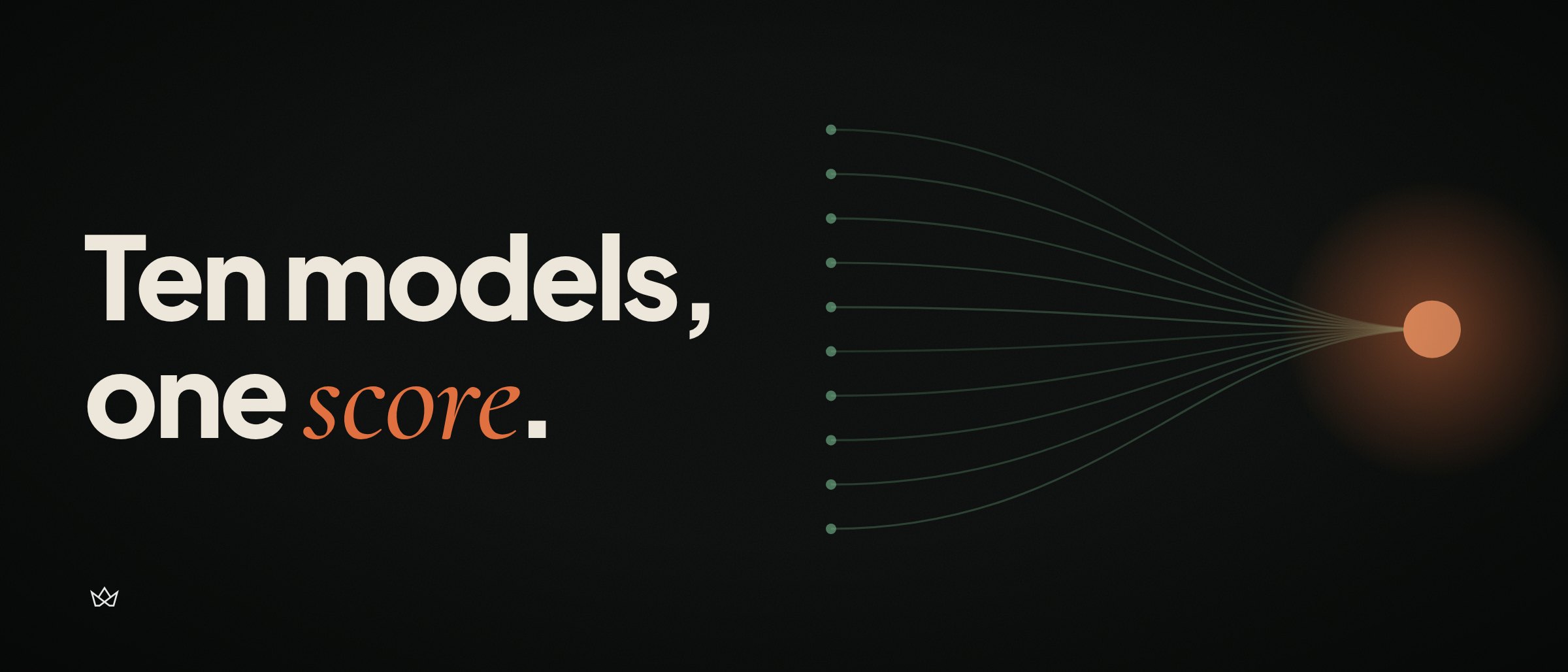
We query 10 AI surfaces: ChatGPT (with web search), Claude, Gemini, Perplexity, DeepSeek, Grok, Mistral, Qwen, Google AI Overview, and Google AI Mode. These represent the major AI platforms buyers use to research products.
We chose these 10 because they span training-only and web-search-enabled models, US-headquartered and non-US-headquartered models, and general-purpose and search-specific AI surfaces. The mix ensures the results reflect the full AI landscape, not just one model's perspective.
The prompts
For each category, we design 100 prompts based on real buying questions. The kind a VP of Engineering, a RevOps leader, or a Head of DevOps would actually type into ChatGPT or Perplexity when evaluating tools.
Examples: "What are the best monitoring tools for Kubernetes?" or "Compare Apollo and Outreach for mid-market outbound." We include broad category queries, specific comparison queries, use-case-specific queries, and pricing queries. The set covers the full range of buying-journey questions, from early research to final evaluation.
We don't include promotional or leading queries like "why is Datadog the best." Every prompt is the kind of question a neutral buyer would ask.
The scoring
Each response is parsed for brand mentions, recommendations, citations, and sentiment. We track how many times each brand is mentioned, whether the mention is a recommendation or just a reference, what sources the AI cites, and the overall sentiment of the mention.
The weighted visibility score combines these signals into a single number between 0 and 100. Mentions on more models, across more prompt types, with higher recommendation rates and positive sentiment, produce a higher score. The weighting reflects how much each signal contributes to a buyer's perception: a direct recommendation carries more weight than a passing mention in a list.
The limitations
100 prompts per category is a meaningful sample but not exhaustive. There are buying questions we don't cover. Our prompt design reflects our judgment about what matters, and other researchers might choose differently.
The results are a point-in-time snapshot. AI models update their training data, their web-search behavior, and their response patterns over time. A brand's visibility score today may not be the same in six months. This is AI search volatility, and it's real.
We measure AI recommendations, not purchase influence. We don't know how much a ChatGPT recommendation actually affects buying decisions. We know AI search is growing rapidly, but the conversion path from AI recommendation to purchase is not yet well-studied.
English only. Our prompts and analysis are in English. AI visibility for non-English markets may differ significantly.
Why this matters
These limitations are real. But even with them, the data reveals structural patterns consistent across all three categories: extreme concentration at the top, training-data advantages for established brands, citation patterns that favor comprehensive content, and model-level differences that create different leaderboards on different AI surfaces.
Understanding these patterns doesn't require perfect measurement. It requires data that's directionally reliable across a large enough sample to surface real trends. We believe our methodology meets that bar, and we continue to refine it with each report. If you want to run the same kind of measurement on your own brand, here's how to measure AI visibility.
All three reports are available at tryrenown.com/research.
Frequently asked questions
Which AI models do you test?
Ten: ChatGPT (with web search), Claude, Gemini, Perplexity, DeepSeek, Grok, Mistral, Qwen, Google AI Overview, and Google AI Mode. The mix spans training-only and web-search models, US and non-US providers, and general-purpose and search-specific surfaces.
How many prompts do you use?
100 per category, designed around real buying questions across the full journey: broad category queries, specific comparisons, use-case questions, and pricing. We exclude leading prompts like "why is X the best."
How is the visibility score calculated?
We parse each response for mentions, recommendations, citations, and sentiment, then combine them into a weighted 0-100 score. Mentions across more models and prompt types, with higher recommendation rates and positive sentiment, score higher. A recommendation outweighs a passing mention.
What can't this methodology tell me?
It's a point-in-time snapshot subject to model updates, it's English-only, and it measures AI recommendations, not proven purchase influence. The conversion path from AI recommendation to sale isn't yet well-studied.
Renown is an AI visibility platform that tracks how AI models talk about your brand across ChatGPT, Claude, Gemini, Perplexity, and Google AI Overviews.
Related Articles
Six Questions to Ask Your AI Visibility Data
A score is a thermometer. It tells you there's a fever. Six questions that tell you why, and what to do about it.
Ask Renown From Claude and ChatGPT
Your AI visibility data, answered by the AI you already use. Connect once, then ask in plain language.
How AI Chooses Its Sources: 3,543 Citations, Analyzed
AI doesn't read your website. It reads Reddit, YouTube, Wikipedia, and a handful of independent blogs. We have the data: 3,543 citations across two engines and 60 questions.


