Datadog captures 78% of AI visibility while most observability tools are invisible
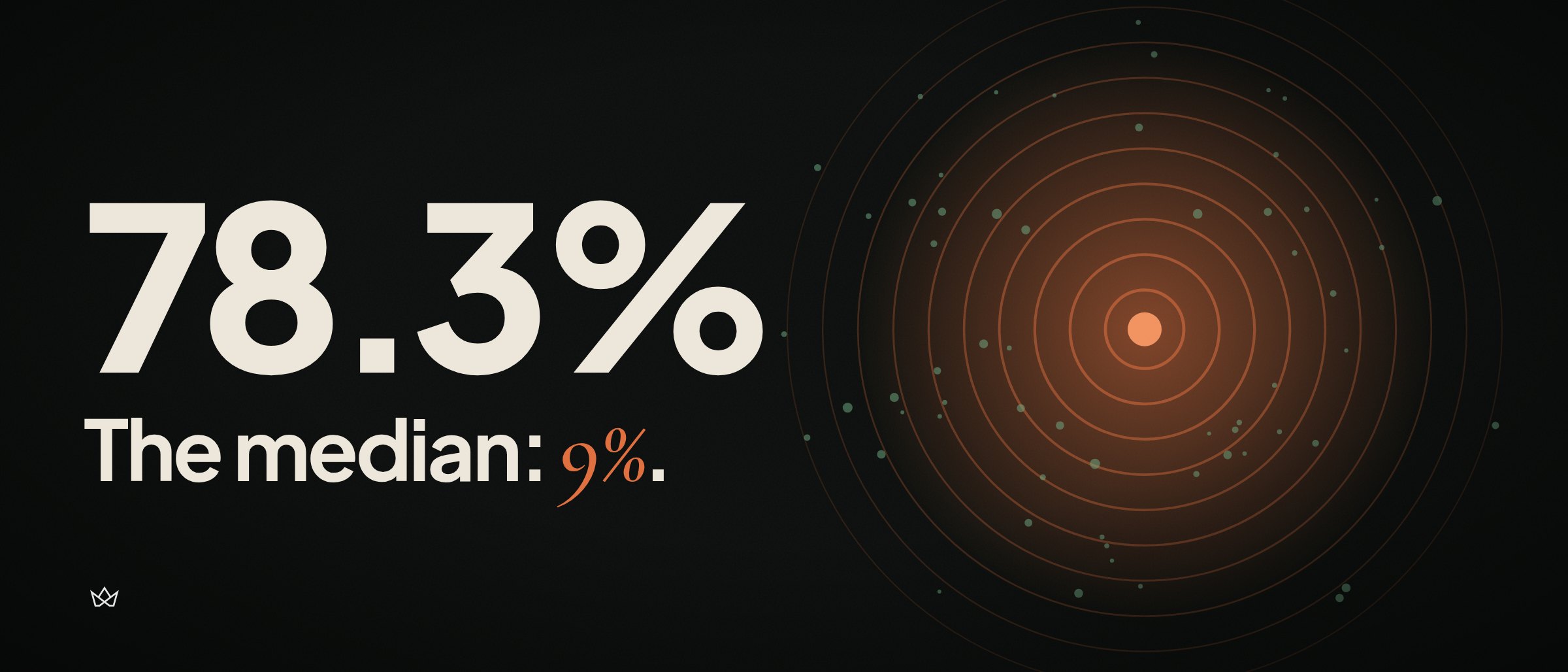
One brand owns the recommendation space. The median tool is invisible. The gap between #1 and the middle is 69 points, the widest we've measured.
TL;DR
We ran 100 prompts across 10 AI models to see how 30 observability brands show up in AI responses. Datadog scored 78.3% AI visibility. The median brand sat at 9%. That's not a competitive market. That's one brand occupying the entire recommendation space while 20+ alternatives barely register. The gap between #1 and the median is 69 points, the widest we've measured in any category.
The full top 15
| Rank | Brand | AI Visibility | Models |
|---|---|---|---|
| 1 | Datadog | 78.3 | 10/10 |
| 2 | Grafana | 65.6 | 10/10 |
| 3 | Prometheus | 55.8 | 10/10 |
| 4 | New Relic | 55.6 | 10/10 |
| 5 | Dynatrace | 46.9 | 10/10 |
| 6 | Splunk | 38.7 | 10/10 |
| 7 | Elastic | 35.5 | 10/10 |
| 8 | SigNoz | 22.6 | 10/10 |
| 9 | OpenObserve | 16.8 | 6/10 |
| 10 | Netdata | 15.3 | 10/10 |
| 11 | Honeycomb | 15.2 | 10/10 |
| 12 | Zabbix | 14.5 | 10/10 |
| 13 | Dash0 | 13.4 | 7/10 |
| 14 | SolarWinds | 13.0 | 10/10 |
| 15 | AppDynamics | 11.2 | 9/10 |
Below #7, every brand is in single digits or low teens. The cliff between the top tier and everyone else is steep.
Machine legibility, not marketing spend
The most important finding in this report is what AI visibility does not correlate with. It does not track with marketing budgets. It does not track with product quality. It does not follow brand recognition among practitioners.
It correlates with machine legibility. How well your content is structured for AI consumption. How frequently your brand appears in the sources that AI models trust. How consistently you show up across different query types with clear, parseable information.
Datadog is not #1 because they spend the most on marketing. They're #1 because their documentation, blog content, pricing pages, and technical guides are structured in ways AI models can read, parse, and cite. They show up in comparison articles, vendor-neutral reports, and community discussions that AI models pull from.
Prometheus at #3 is the open-source bright spot
Prometheus scores 55.8, making it the highest-ranked open-source tool and #3 overall. In a landscape dominated by commercial vendors with professional content teams and marketing budgets, Prometheus holds a remarkable position.
The likely driver: Prometheus has an enormous community footprint. It's referenced in thousands of DevOps tutorials, conference talks, CNCF documentation, and Stack Overflow answers. That body of content gives AI models a rich, distributed set of sources to draw from. Prometheus is machine-legible not because someone optimized it for AI, but because the community organically created a massive content surface. We dug into why open-source tools usually lose this race in a separate piece.
AI gets pricing wrong
We checked what AI models say about pricing for the brands in this report. The error rates are notable. When models state specific price points for Datadog, New Relic, or Splunk, the numbers frequently don't match current reality. Pricing pages are often gated or dynamically generated, which means training data contains outdated figures and web-search models sometimes pull stale cached versions.
If your potential buyers are asking AI what your product costs, the answer they get may be wrong. And you wouldn't know unless you checked. We broke down the pricing hallucination problem in detail.
What this means
When your CTO asks ChatGPT what monitoring tool to evaluate, Datadog captures 78% of the AI visibility in this category. Grafana and Prometheus are well-represented. After the top 7, most brands are effectively invisible.
The gap between the #1 brand and the median brand is 69 points. That's the widest we've seen in any category. For observability vendors outside the top tier, AI search is currently a competitor's distribution channel, not yours. The first move is measuring where you actually stand, then closing the gap.
The full report covers all 30 brands with model-by-model breakdowns, head-to-head matchups, citation analysis, pricing accuracy data, and a playbook for improving visibility.
Read the full Observability reportFrequently asked questions
How is the AI visibility score calculated?
It's a weighted 0-100 score combining how often a brand is mentioned across 10 AI models, whether those mentions are recommendations or passing references, the sources AI cites, and sentiment. A direct recommendation counts for more than a name-drop in a list. We explain the full method in our methodology post.
Why is Datadog so far ahead in observability?
Machine legibility, not marketing spend. Datadog's documentation, comparison content, and technical guides are structured so AI models can parse and cite them, and the brand appears consistently across the third-party sources AI trusts. That compounds into a 78.3% score while the median brand sits at 9%.
Can a smaller observability tool catch up?
Yes, but not with incremental content. A 69-point gap doesn't close with a few blog posts. The realistic path is becoming the definitive, machine-readable reference for a specific slice of the category, then expanding. Start by auditing your current AI visibility.
Does AI really get pricing wrong?
Frequently. Gated or dynamically generated pricing pages leave AI guessing, and models state those guesses with full confidence. If your pricing changed in the last year, older models are likely citing stale numbers.
Renown is an AI visibility platform that tracks how AI models talk about your brand across ChatGPT, Claude, Gemini, Perplexity, and Google AI Overviews.
Related Articles
Six Questions to Ask Your AI Visibility Data
A score is a thermometer. It tells you there's a fever. Six questions that tell you why, and what to do about it.
Ask Renown From Claude and ChatGPT
Your AI visibility data, answered by the AI you already use. Connect once, then ask in plain language.
How AI Chooses Its Sources: 3,543 Citations, Analyzed
AI doesn't read your website. It reads Reddit, YouTube, Wikipedia, and a handful of independent blogs. We have the data: 3,543 citations across two engines and 60 questions.


